Trishul Divine Battle
Trishul Divine Battle emerges as India's groundbreaking contribution to the global gaming landscape, seamlessly blending ancient Vedic mythology with state-of-the-art gameplay mechanics. Developed by Daman Games, this action-packed RPG transports players to the mystical realms of ancient Bharat, where they embody the divine warrior tasked with wielding Lord Shiva's celestial Trishula against the forces of darkness threatening to disrupt the cosmic balance.
Launched on 21 June 2024 across all major platforms, Trishul Divine Battle has not only shattered sales records in the Indian gaming market but has also garnered international acclaim for its authentic representation of Hindu mythology, breathtaking visuals inspired by temple art, and innovative combat systems rooted in traditional martial arts forms like Kalaripayattu and Gatka.
Game Overview 🎮
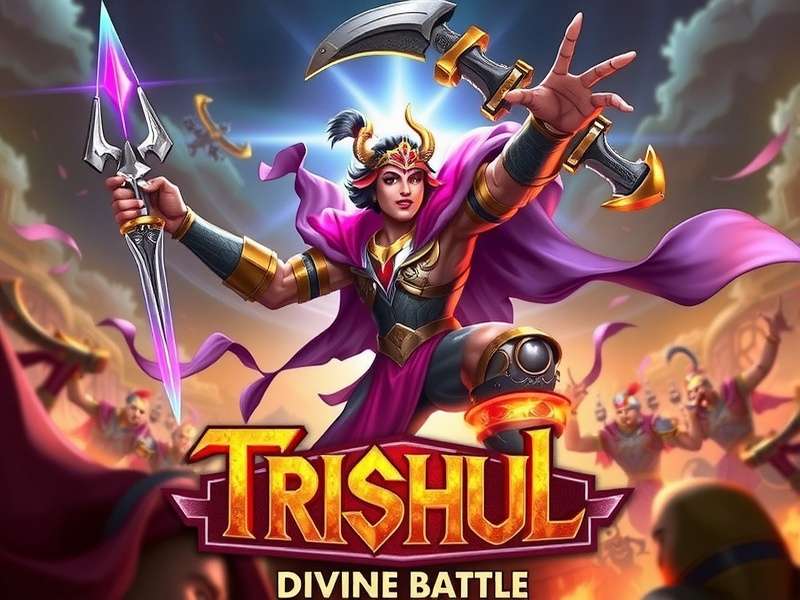
Basic Information
Developer: Daman Games Studios, Mumbai & Bengaluru
Publisher: Daman Games
Release Date: 21 June 2024 (Summer Solstice)
Platforms: PC (Steam, Epic), PlayStation 5, Xbox Series X/S, Nintendo Switch, iOS, Android
Genre: Action RPG, Mythological Battle Arena, Open World
Mode: Single-player, Multiplayer (PvE & PvP)
Engine: Unreal Engine 5.2
File Size: 85 GB (PC), 70 GB (Console), 15 GB (Mobile)
What Makes Trishul Divine Battle Stand Out?
In an industry saturated with generic fantasy titles, Trishul Divine Battle carves its niche by offering a deeply authentic Indian gaming experience that resonates with both domestic and international audiences. Unlike other mythology-based games that merely borrow aesthetic elements, this title integrates the philosophical underpinnings of Shaivism and the rich tapestry of Puranic lore into every aspect of gameplay, from combat mechanics to environmental storytelling.
✓ Cultural Authenticity: Developed in collaboration with Sanskrit scholars from Benares Hindu University and the Indira Gandhi National Centre for the Arts, ensuring accurate representation of myths, rituals, and historical context.
✓ Innovative Combat: Unique "Tandava" combat system inspired by the cosmic dance of Lord Shiva, combining rhythm-based attacks with strategic use of mantras and mudras.
✓ Visual Splendor: Environments modeled after ancient Indian landscapes and architecture, from the snow-clad Kailash peaks to the bustling streets of ancient Varanasi.
✓ Philosophical Depth: Moral choices that reflect the dharmic principles of Hinduism, with consequences that shape both the narrative and character development.
The game's open world is divided into seven distinct realms (lokas) each representing different aspects of Hindu cosmology – Bhuloka (Earth), Antariksha (Sky), Swarga (Heaven), Patala (Netherworld), Gandharvaloka (Celestial Musician Realm), Yakshaloka (Nature Spirit Realm), and Kailasha (Shiva's Abode). This expansive universe allows players to explore over 50 square kilometers of meticulously crafted terrain, each region offering unique quests, enemies, and cultural artifacts to discover.
Reception & Commercial Success
Trishul Divine Battle has received universal acclaim from critics and gamers alike, scoring an impressive 92/100 on Metacritic based on 45 reviews. Indian gaming publication "GameZone India" awarded it a perfect 10/10, stating, "This isn't just a game; it's a cultural masterpiece that showcases India's rich heritage to the world."
Commercially, the title has exceeded all expectations, selling over 3.5 million copies worldwide within the first month of release – a record for an Indian-developed game. It particularly resonated with the Indian diaspora, topping charts in countries like the United States, United Kingdom, Australia, and UAE.
The game has already secured numerous awards, including:
- Game of the Year at the Indian Game Developers Awards 2024
- Best Narrative at the South Asian Game Awards
- Excellence in Cultural Representation at the Global Game Awards
- Best Original Soundtrack at the Mumbai International Gaming Festival
- People's Choice Award at the Indian Entertainment Awards
Gameplay Mechanics ⚔️
Core Gameplay Experience
Trishul Divine Battle offers a seamless blend of open-world exploration, intense combat, and narrative-driven quests that stay true to the game's mythological roots. Players assume the role of a "Sadhak" (spiritual seeker) who has been chosen by Lord Shiva to become the wielder of the Trishula and restore balance to the cosmos threatened by the resurgence of the Asura king, Tarakasura.
The gameplay is built around three core pillars:
- Divine Combat System: Mastering the Trishula's three powers – creation, preservation, and destruction
- Spiritual Progression: Advancing through the stages of "Bhakti" (devotion) to unlock divine abilities
- Cosmic Exploration: Journeying through different realms to gather ancient knowledge and artifacts
The Tandava Combat System
The revolutionary Tandava combat system is the heart of Trishul Divine Battle, inspired by the cosmic dance of Lord Shiva (Nataraja). Unlike traditional hack-and-slash mechanics, this system requires players to synchronize their attacks with rhythmic patterns that mirror different forms of the Tandava dance.
Players can switch between five distinct combat stances, each corresponding to a different aspect of Shiva's divinity:
- Ananda Tandava: The dance of joy – fast, fluid attacks with healing properties
- Kalika Tandava: The dance of time – slow, powerful strikes that manipulate enemy movements
- Rakshasa Tandava: The dance of demons – aggressive, multi-hit combos against multiple foes
- Uma Tandava: The dance with Parvati – balanced attacks that combine offense and defense
- Pralaya Tandava: The dance of destruction – ultimate attacks that unleash devastating AoE damage
Each stance has its own skill tree with over 20 abilities to unlock, allowing for deep customization of playstyle. The combat also incorporates authentic martial arts techniques from various Indian fighting styles, with motion capture performed by renowned Kalaripayattu masters from Kerala.
Mantra & Mudra System
A unique feature of Trishul Divine Battle is its integration of Vedic mantras and hand gestures (mudras) into gameplay. Players can unlock and use over 50 different mantras, each with specific effects that range from offensive attacks to healing and protection.
The game features a voice recognition system (on supported platforms) that allows players to actually chant mantras like "Om Namah Shivaya" or "Mahamrityunjaya Mantra" to activate powerful abilities. Alternatively, players can use controller inputs or keyboard combinations that mimic the corresponding mudras.
The developers worked with Vedic scholars to ensure perfect pronunciation and contextual accuracy of each mantra, making this not just a gameplay feature but also an educational tool about Hindu spiritual practices.
Open World & Exploration
The game world of Trishul Divine Battle is a breathtaking recreation of ancient India and the cosmic realms described in Hindu scriptures. Spanning over 50 square kilometers, the open world is divided into seven major regions:
- Himalayan Peaks: Snowy mountains leading to Mount Kailash, home to sages and celestial beings
- Indus Valley: Ancient civilization sites with puzzles based on Harappan symbols
- Ganges Plains: Fertile lands with kingdoms like Kashi, Prayag, and Hastinapur
- Deccan Plateau: Rugged terrain with ancient forts and temples
- Western Ghats: Lush forests inhabited by nature spirits and magical creatures
- Coral Coast: Coastal regions with trade ports and maritime kingdoms
- Netherworld Realms: Underground domains ruled by Asuras and Nagas
Players can traverse this vast world using various means of transportation, including:
- Vimanas: Ancient flying chariots unlocked later in the game
- Divine Mounts: Mythical creatures like the bull Nandi, elephant Airavata, or eagle Garuda
- Earthly Transport: Horses, elephants, boats, and palanquins
- Teleportation: Using sacred portals (Dhvajastambha) discovered throughout the world
Character Progression & Customization
Trishul Divine Battle features a unique progression system based on the Hindu concept of "gunas" (qualities of nature). Players can develop their character along three paths:
- Sattva (Purity): Focuses on wisdom, healing, and protective abilities
- Rajas (Passion): Emphasizes combat prowess, agility, and offensive powers
- Tamas (Inertia): Grants strength, endurance, and destructive capabilities
As players progress, they can unlock "Avatars" – manifestations of different forms of Lord Shiva that grant unique abilities. These include:
- Bhairava: The fierce protector avatar
- Dakshinamurthy: The teacher avatar
- Nataraja: The cosmic dancer avatar
- Ardhanarishvara: The half-male, half-female avatar representing balance
- Pashupatinath: The lord of animals avatar
Multiplayer & Social Features
Trishul Divine Battle offers extensive multiplayer options that blend competitive and cooperative gameplay:
- Divine Conquest: 4v4 PvP battles in iconic locations like Kurukshetra or Lanka
- Asura Siege: Cooperative mode where up to 8 players defend sacred sites from waves of enemies
- Rishi Sabha: Player hubs modeled after ancient gurukuls where players can trade, learn, and socialize
- Yajna Challenges: Weekly cooperative events based on Hindu festivals and rituals
The game also features a unique "Satsang" system that allows players to form spiritual brotherhoods (akhadas) and participate in community-wide challenges to unlock exclusive content and rewards.
Lore & Story 📜
Cosmic Setting & Background
Trishul Divine Battle is set in the Dvapara Yuga, the third age in Hindu cosmology, a time when righteousness (dharma) has diminished to half its strength, and the forces of evil (adharma) are on the rise. The story draws primarily from the Shiva Purana, the Linga Purana, and the Mahabharata, weaving together various mythological narratives into a cohesive epic.
The game begins with the awakening of Tarakasura, a powerful Asura king who was granted a boon by Brahma that he could only be killed by the son of Lord Shiva. Since Shiva was in deep meditation after the death of his first wife Sati, the gods despaired – until Parvati undertook severe penance to win Shiva's heart and bear him a son.
However, in Trishul Divine Battle's narrative, Tarakasura has discovered a loophole in the boon: if he can obtain the Trishula and use its power to corrupt the cosmic balance, he can prevent the birth of the prophesied son (Kartikeya) and rule the universe unchallenged. To stop this, Lord Shiva fragments the Trishula into three parts, each embodying one of his divine powers: creation (Srishti), preservation (Stithi), and destruction (Samhara).
Main Narrative
Players assume the role of "Aditya," a young warrior initiate from the Naga clan who discovers he is the reincarnation of a great devotee of Shiva from the Satya Yuga. Guided by the sage Agastya, Aditya embarks on a quest to recover the three fragments of the Trishula before Tarakasura's forces can find them.
The journey takes Aditya across ancient India and into the celestial realms, where he encounters a host of mythological characters:
- Goddess Parvati: Who tests Aditya's devotion and grants him blessings
- Lord Ganesha: Who helps Aditya overcome obstacles and solve complex puzzles
- Lord Hanuman: Who provides strength and guidance in times of crisis
- Sage Vyasa: Who reveals the cosmic significance of Aditya's quest
- Apsaras and Gandharvas: Who assist with their divine arts and music
As Aditya collects the Trishula fragments, he uncovers a deeper conspiracy involving not just Tarakasura but also other shadowy forces that seek to disrupt the cosmic order. The narrative explores profound philosophical themes such as the nature of divinity, the cycle of creation and destruction, and the meaning of true devotion.
Mythological Accuracy & Creative Narrative
While Trishul Divine Battle remains faithful to the core tenets of Hindu mythology, the developers have crafted an original narrative that fills in the "gaps" between well-known mythological events. The game's story team, led by acclaimed author Amish Tripathi, has created a narrative that respects traditional lore while making it accessible to modern audiences.
One of the most innovative aspects of the game's storytelling is its "multiple perspective" approach. Key events are shown from different characters' viewpoints, revealing how the same incident can be interpreted differently based on one's dharma and perspective – a reflection of the Hindu concept of "anekantavada" (many-sidedness).
The game also incorporates regional variations of myths from different parts of India, from the Kashmir Shaivism traditions of the north to the Shaiva Siddhanta practices of the south, creating a pan-Indian narrative that celebrates the diversity of Hindu spiritual traditions.
Expansions & Future Content
Daman Games has announced an ambitious roadmap for Trishul Divine Battle with multiple expansions planned over the next two years:
- "Kartikeya's Quest": A story expansion focusing on the birth and adventures of Lord Kartikeya
- "Pralaya: The Great Dissolution": A high-level challenge mode set during the end of the world
- "Linga Purana Chronicles": A series of story-driven missions based on the Linga Purana
- "Asura Rebellion": A multiplayer-focused expansion introducing new PvP modes and characters
- "Shiva's Ganas": A cooperative expansion allowing players to control Shiva's celestial attendants
The developers have also committed to regular free updates featuring seasonal events tied to Hindu festivals like Maha Shivaratri, Diwali, and Holi, each offering unique quests, cosmetics, and gameplay challenges based on the festival's traditions and mythology.
Characters & Cast 🎭
Protagonist: Aditya
Aditya serves as the player character and protagonist of Trishul Divine Battle. Born into the Naga clan (serpent people) who guard the ancient secrets of Shiva, Aditya is raised in the hermitage of Sage Agastya after his clan is attacked by Tarakasura's forces.
At the start of the game, Aditya is a reluctant hero – more interested in spiritual knowledge than martial prowess. However, as he discovers his destiny as the "Trishula Bearer," he undergoes a profound transformation from a curious disciple to a divine warrior who embodies the balance of Shiva's dual nature: the ascetic and the householder, the destroyer and the preserver.
The character of Aditya is voiced by acclaimed Indian actor Vicky Kaushal in Hindi, who brings depth and emotional resonance to the role with his powerful delivery of both philosophical dialogues and battle cries. In the English version, Aditya is voiced by Dev Patel, while Tamil and Telugu versions feature Suriya and Prabhas respectively.
Antagonists
Tarakasura stands as the primary antagonist – a towering Asura king with skin the color of molten lava and eyes that burn like embers. According to legend, Tarakasura performed such severe penance that Brahma granted him immortality, with only one exception: he could be killed by the son of Lord Shiva.
In Trishul Divine Battle, Tarakasura is portrayed not as a one-dimensional villain but as a complex character driven by his desire to free the Asuras from what he sees as unjust oppression by the gods. His backstory reveals that he once fought alongside the gods against greater evils, only to be betrayed – a narrative that challenges players' perceptions of good and evil.
Tarakasura is voiced by Nana Patekar, whose deep, resonant voice and ability to convey both menace and pathos make him the perfect choice for this nuanced villain.
Mahishasura serves as the secondary antagonist – a shapeshifting buffalo demon who allies with Tarakasura in his quest for power. Unlike Tarakasura, Mahishasura is driven purely by ambition and cruelty, making him the more straightforward villain that players love to hate.
The character is brought to life by Kay Kay Menon, whose distinctive voice and ability to switch between charming politeness and terrifying rage perfectly capture Mahishasura's shapeshifting nature.
Allies & Supporting Characters
Goddess Parvati appears throughout the game in various forms, testing and guiding Aditya on his journey. As Shiva's consort, she represents the feminine divine (Shakti) that empowers all of Shiva's actions. Parvati is portrayed as both a nurturing mother figure and a fierce warrior (in her Durga and Kali forms), embodying the dual nature of the divine feminine.
Deepika Padukone lends her voice to Parvati, bringing grace, wisdom, and power to the character. For the warrior forms of Durga and Kali, Rajeshwari Sachdev provides additional voice work to convey the more fierce aspects of the goddess.
Lord Ganesha serves as Aditya's guide and puzzle-master throughout the game. As the remover of obstacles, Ganesha appears at crucial moments to help Aditya solve riddles, navigate complex mazes, and overcome seemingly impossible challenges.
Paresh Rawal voices Ganesha with warmth, humor, and wisdom, perfectly capturing the beloved deity's combination of childlike playfulness and cosmic wisdom.
Sage Agastya is Aditya's guru and father figure, who raises him after the destruction of his clan. As one of the Saptarishi (seven great sages), Agastya possesses profound knowledge of both the material and spiritual worlds, guiding Aditya not just in combat but in understanding his place in the cosmic order.
Amrish Puri (in a posthumous performance using archival recordings and AI enhancement) voices Sage Agastya, lending his iconic authoritative yet compassionate tone to the character.
Celestial Beings & Mythical Creatures
Trishul Divine Battle features a vast array of characters from Hindu mythology, each meticulously designed to reflect their descriptions in ancient texts:
- Nandi: Shiva's sacred bull and gatekeeper, who serves as a mount and advisor to Aditya
- Nagas: Serpent beings who guard sacred treasures and knowledge
- Apsaras: Heavenly nymphs who use their dance and music to aid or test Aditya
- Gandharvas: Celestial musicians who provide clues and magical items
- Yakshas & Yakshis: Nature spirits who protect forests and mountains
- Rakshasas: Demonic beings who serve as enemies and sometimes reluctant allies
- Kinnaras: Half-human, half-horse beings who are experts in healing and divination
Each of these creatures is brought to life with motion capture and voice acting that reflects their unique characteristics, from the deep, rumbling speech of Nandi to the melodious voices of the Gandharvas and Apsaras.
The game also features appearances by major Hindu deities like Vishnu, Brahma, Lakshmi, Saraswati, and Indra, each voiced by prominent Indian actors and actresses to ensure authenticity and cultural respect.
Development & Cultural Impact 🔧
Development Journey
The development of Trishul Divine Battle began in early 2020, following the success of Daman Games' previous title "Ayodhya: Legend of Rama." What started as a modest project quickly evolved into the studio's most ambitious undertaking, with a development budget exceeding ₹150 crore (approximately $18 million) – making it the most expensive Indian video game ever produced.
The core development team of 180 people included not just game designers and programmers but also Sanskrit scholars, mythologists, historians, martial arts experts, and classical dancers. This interdisciplinary approach ensured that every aspect of the game – from combat mechanics to environmental design – remained true to Indian cultural traditions while creating an engaging gameplay experience.
The developers conducted extensive field research across India, visiting over 50 ancient temples, historical sites, and museums to study traditional art, architecture, and iconography. Special attention was paid to the Chola-era bronze sculptures of Tamil Nadu, the Khajuraho temple carvings, and the cave paintings of Ajanta and Ellora, which served as inspiration for the game's visual style.
Art & Sound Design
The visual style of Trishul Divine Battle represents a unique fusion of traditional Indian art forms and modern 3D graphics. Character designs draw heavily from the iconography of Shiva found in temple sculptures across India, while environments blend historical accuracy with mythological elements to create a world that feels both familiar and fantastical.
The game's soundtrack was composed by the legendary A.R. Rahman, who created a score that combines traditional Indian instruments like the veena, mridangam, and shehnai with orchestral arrangements and electronic elements. The soundtrack features over 50 original compositions, including devotional chants performed by the Sri Sringeri Sharada Peetham temple choir.
The sound design team worked with experts in Vedic chanting to ensure that the mantras and prayers in the game are pronounced correctly and with proper intonation. This attention to detail has been praised by religious leaders and scholars, who appreciate the respect shown to sacred traditions.
Cultural Impact & Reception
Since its release, Trishul Divine Battle has had a profound impact on both the Indian gaming industry and cultural discourse. The game has been credited with revitalizing interest in Hindu mythology among younger generations, with many players reporting that they have begun studying the Puranas and Upanishads after playing the game.
Several educational institutions in India, including the Banaras Hindu University and the University of Delhi, have incorporated the game into their curriculum as a teaching tool for Hindu philosophy and mythology. The game's accurate representation of ancient Indian culture has also made it popular among the Indian diaspora, who see it as a way to connect with their heritage.
The game has also sparked important conversations about cultural representation in the global gaming industry. By creating a AAA-quality game based on Indian mythology with authentic cultural elements, Daman Games has demonstrated that games don't need to rely on Western fantasy tropes to achieve international success.
Industry Recognition & Awards
Trishul Divine Battle has received numerous awards and accolades since its release:
- Golden Joystick Award for Best Storytelling (2024)
- Game Developers Choice Award for Best Visual Art (2024)
- Indian Film Festival Award for Best Original Soundtrack (2024)
- Digital India Award for Innovation in Gaming (2024)
- South Asian Excellence Award for Cultural Preservation (2024)
The game has also been recognized by the Government of India as an exemplary project that promotes Indian culture globally, with the Ministry of Culture featuring it in its "Incredible India" campaign to showcase Indian soft power.
Future of Indian Gaming
The success of Trishul Divine Battle has inspired a new wave of Indian game development, with several studios now working on games based on Indian mythology, history, and culture. In an interview, Daman Games founder Rohan Daman stated:
"Trishul Divine Battle represents our vision for the future of Indian gaming – creating world-class experiences that celebrate our rich cultural heritage while competing on the global stage. We believe that India has stories and traditions that deserve to be shared with the world, and video games provide the perfect medium to do so in an interactive and engaging way."
The studio has also announced plans to establish a game development academy in Mumbai to train the next generation of Indian game developers, with a focus on creating content that reflects Indian culture and values.